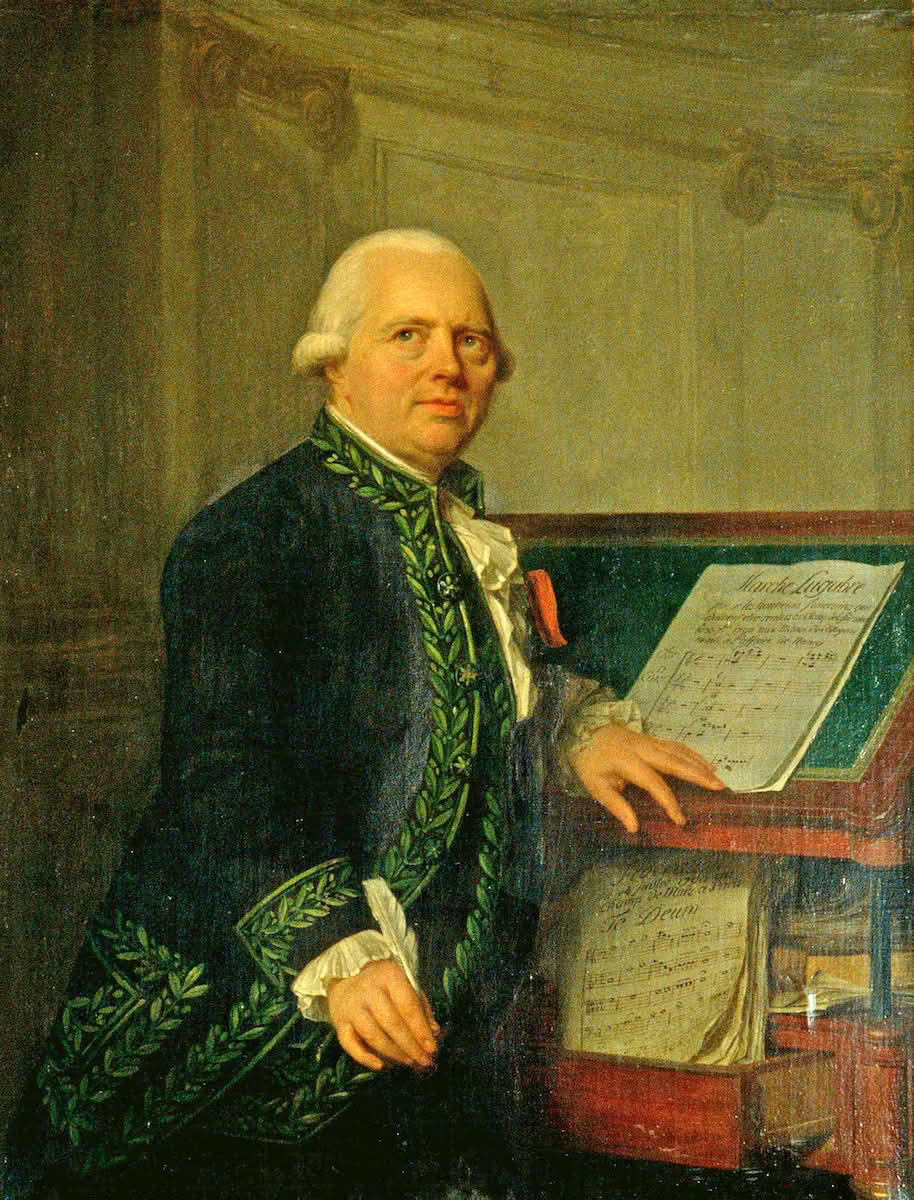
François-Joseph Gossec (1734–1829)
Symphony in G Major, Op. 12 No. 2 (1769)
When speaking of the Classical era, the phrase “French symphonist” is almost a non-sequitur. Symphonies just weren’t things that French composers wrote as a rule, being much more occupied with opera as well as church and chamber music. That’s not to say that symphonies weren’t performed in Paris—they were, and frequently. But the composers of choice were typically folks such as Joseph Haydn and his student Ignaz Pleyel. Later in the 19th century France made up for its symphonic neglect and then some. But until then, home-grown French symphonies were scarce.
But not altogether absent. The long-lived François-Joseph Gossec—he made it to age 95—was competent and prolific in a wide range of genres, including approximately 35 symphonies. His Symphony in G Major, Op. 12 No. 2 exemplifies his bright, witty style at its best. The opening Allegro molto savors of the Mannheim court orchestra, with its busy string textures, upwards zooming melodies, and skillful use of a pair of oboes. The second-place Allegretto molto contains such well-crafted irregular-length phrases that the listener isn’t likely to catch the irregularity without a commentarial heads-up. The finale is lightweight, charming, and toe-tappy, in keeping with best practices of the 1760s. It wouldn’t be long before composers began exploring considerably more substantial last movements, but for now, the finale-as-dessert reigned supreme.
Wolfgang Amadeus Mozart (1756–1791)
Symphony No. 31 in D Major, K. 397 “Paris” (1778)
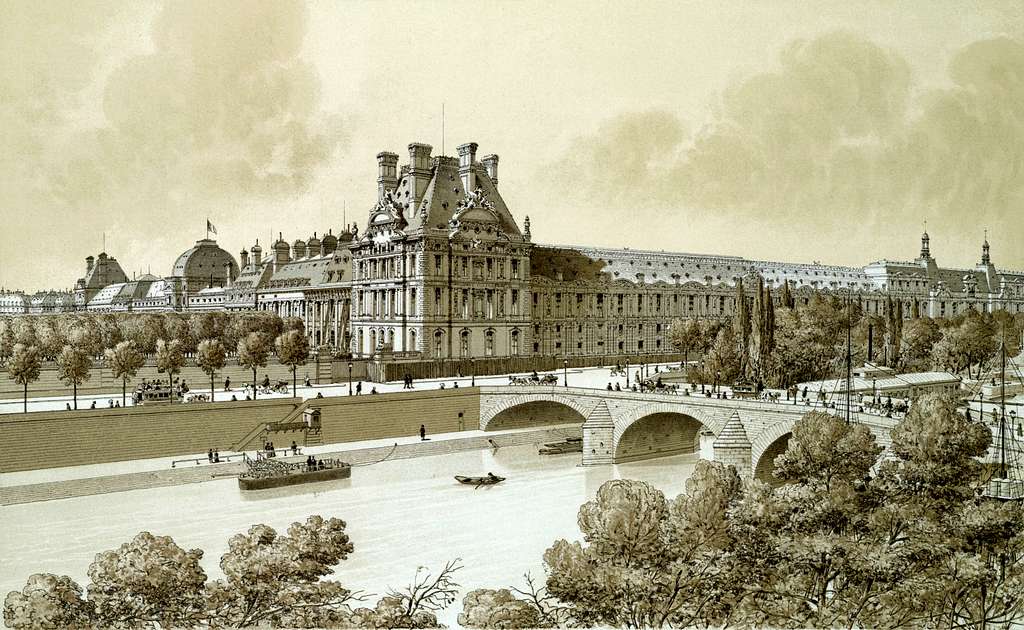
Mozart was typically the author of his own misfortunes. Careless with money and lacking everyday common sense, he was woefully overconfident in his ability to either charm or borrow his way out of trouble. Neither was possible during his disastrous eighteen-month trip through Germany and France in 1777-78 in search of advancement and opportunities beyond Salzburg. A miserable sojourn in Paris, where he was reduced to pawning his valuables, marked the nadir of his career so far. Then his mother died. (She had been his chaperone this time around, father Leopold being unable to absent himself yet again from his kapellmeister duties.)
Among the few good things that came out of the miserable trip was the “Paris” Symphony in D Major, K. 397, composed in 1778 for the Concert Spirituel, the oldest and most established concert series in Paris. Apparently the rehearsal was a disaster, but the concert went very well indeed, as Mozart described in a letter of July 3, 1778 to Leopold:
“Right in the middle of the first Allegro was a passage that I knew they would like; the whole audience was thrilled by it and there was a tremendous burst of applause … I began [my finale] with the two violin sections only, piano for the first eight bars—followed instantly by a forte; the audience, as I expected, said ‘Shh!’ at the soft beginning, and then, as soon as they heard the forte that followed, immediately began to clap their hands.”
Joseph Bologne, Chevalier de Saint-Georges (1745–1799)
Symphony No. 1 in G Major, Op. 11 No. 1 (ca. 1778)
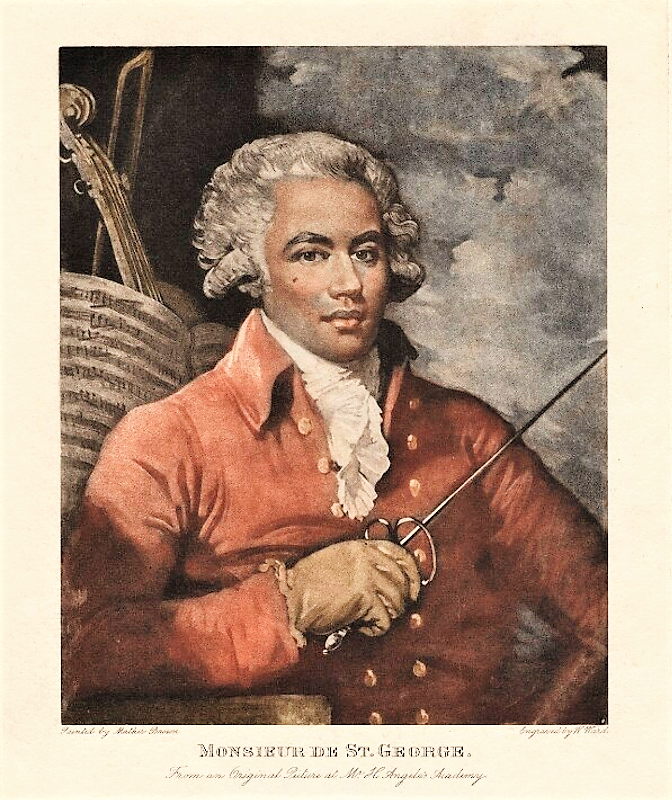
We possess a fine 1787 portrait of Joseph Bologne in which he embodies the very image of the pre-Revolutionary French gentleman, complete with powdered wig, billowing lace kerchief, richly textured velvet coat, gloves, and elegant rapier attesting to his fencing skill.
But there’s something just a bit different about it: Joseph Bologne was a person of color. The son of a wealthy French planter and a slave woman, he was born in the French West Indies and settled in Paris, where he happily hobnobbed with the elite in their salons, clubs, and gardens.
His output is mostly violin music, but he also produced two symphonies in the late 1770s. These are admirable examples of the style galant—decorative and elegant, more concerned with providing a pleasing surface than delving into the deeper emotions. Symphony No. 1 in G Major begins with a well-crafted first movement in the then-emerging ‘sonata’ form, followed by a lighter-than-air dance movement. To conclude, Bologne presents a quickstep (and short) finale characterized by roly-poly rhythms and an overall uncomplicated demeanor.
Franz Joseph Haydn (1732–1809)
Symphony No. 85 in B-flat Major “La Reine” (1785)
It was among the most lavish commissions of the later 18th century. In 1784 the Parisian Olympic Lodge offered Joseph Haydn a whopping 1350 gulden—more than his entire yearly salary as Esterházy kapellmeister—for six new symphonies, to be performed by their superlative orchestra led by Joseph Bologne. Thus were born the ‘Paris’ symphonies, Haydn’s most impressive achievements in the symphonic genre until his twelve ‘London’ symphonies of the 1790s.
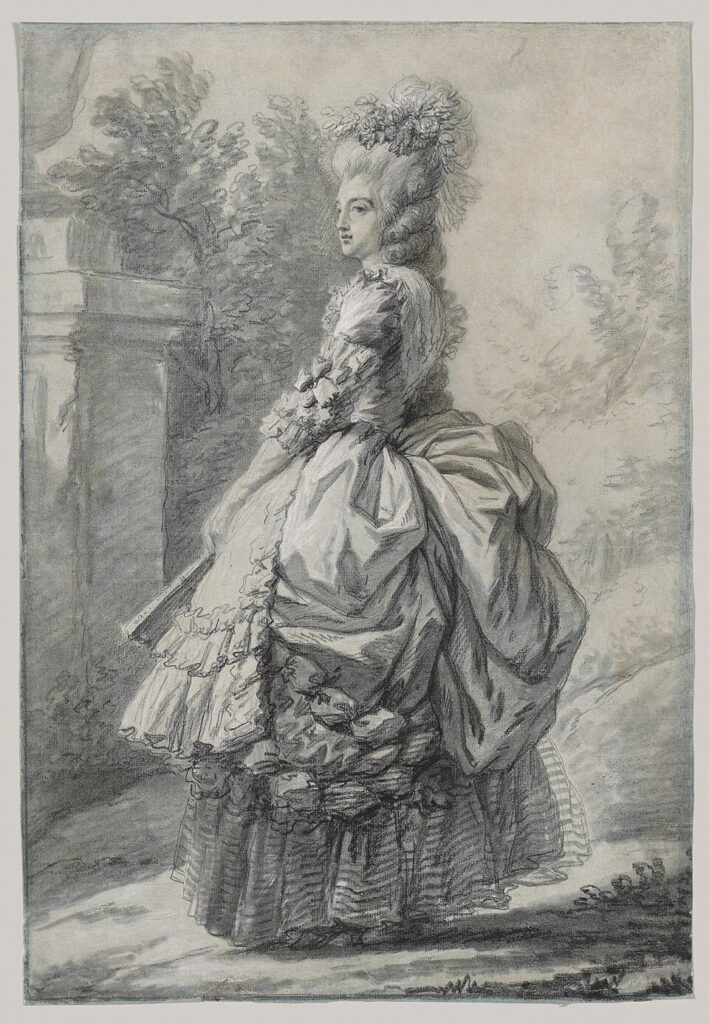
No. 85 bears the nickname “La Reine” in honor of Marie Antoinette, who claimed it as her favorite symphony. While it stands among Haydn’s most ingratiating and lyrical late works, it makes abundantly clear that, by and large, the style galant just wasn’t his cup of tea. He was too vital for that, too virile; his megawatt-level talent and staggering craftsmanship guaranteed that he would never produce anything that was merely decorative. The La Reine’s brilliant first movement combines surprising twists and turns with a tongue-in-cheek self-quote from his 1772 “Farewell” symphony.
The second-place Romance sports one of those friendly, toe-tappy tunes that Haydn could conjure up with such seeming nonchalance and develop with such breathtaking inventiveness. (Contrary to what you might read elsewhere, it is not a French folk song.) Even the raised-pinky Minuetto e Trio, quite the departure from Haydn’s typically big-boned peasant-dance minuets, spices up its courtly punctilio with off-kilter accents and quirky rhythms.
Haydn was a prime mover in elevating the formerly featherweight finales of the Classical era into more complex and thereby more rewarding conclusions. In this rondo-form Presto we have him at his athletic and greyhound-lean best, as he adroitly avoids the tedium that can arise from all those repetitions of a rondo’s main tune.
Program Annotator Scott Foglesong is the Chair of Musicianship and Music Theory at the San Francisco Conservatory of Music, and a Contributing Writer and Lecturer for the San Francisco Symphony. He also leads the California Symphony’s ground-breaking music education course for adults Fresh Look: The Symphony Exposed.
The 26-27 Season continues with MOZART AND HAYDN IN PARIS on Saturday, February 6 at 7:30 p.m. and Sunday, February 7 at 4 p.m. at the Lesher Center for the Arts in Walnut Creek. Single tickets start at $50 and at $25 for students 25 and under, and include a free 30-minute pre-concert talk starting one hour before the performance. Buy tickets online or call or visit the Lesher Center Ticket Office at 925.943.7469, Wed – Sun, 12:00 noon to 6:00 p.m.