
Composing a California Symphony Commission
Scott Foglesong Interviews Composer-in-Residence Paul Novak
In July 2026 I had the pleasure of speaking with our new composer-in-residence Paul Novak about his thoughts for his first California Symphony commission—well before he had begun composing the work.
“I’m planning a piece for orchestra with recorded samples of voices. I will interview artists, people from the community, family members, and ask them all the same question: what’s your favorite part of your body? Then I’ll weave their responses into this piece, splitting the samples up so I’ll have just the names of the various body parts.”
About the balance between those samples and the orchestra: “I would like it for to really be a conversation between the two, a balance between more intimate moments and passages where you can feel the full power of 70 people making music together.”
About any overall philosophical guidelines: “I’m interested in the affective power of music and its ability to inspire emotions, using many different sonic palettes. I’ve written a lot about the natural world, and I have also been inspired by psychoanalysis and psychology. And I’m also interested in how we respond to sound in our bodies.”
For Parts of the Body—that’s the tentative title—Novak tells us that he hopes “to write a piece that is a novel experience for the audience, but novel in a way that is inclusive and that brings them in.”
A lot can happen between July 2026 and May 2027, and Novak could wind up writing something entirely different. “It’s all about whether it has a magic to it,” says Novak. “Hopefully I can write something that has that kind of magic for the audience.”
Manuel de Falla (1876–1946)
Nights in the Gardens of Spain (1915)
Although Manuel de Falla spent part of his formative years in France, where he was influenced by Debussy, Ravel, and Dukas, he never allowed French idioms to dominate his style. From first to last he protected his Spanish heritage, even after having exiled himself to Argentina in 1939 after Francisco Franco’s fascist coup.
Nights in the Gardens of Spain started out as a set of three nocturnes for solo piano, but 1915 de Falla re-fashioned the suite for piano and orchestra. De Falla’s described it as “symphonic impressions,” which suggests more three-movement tone poem and less concerto.
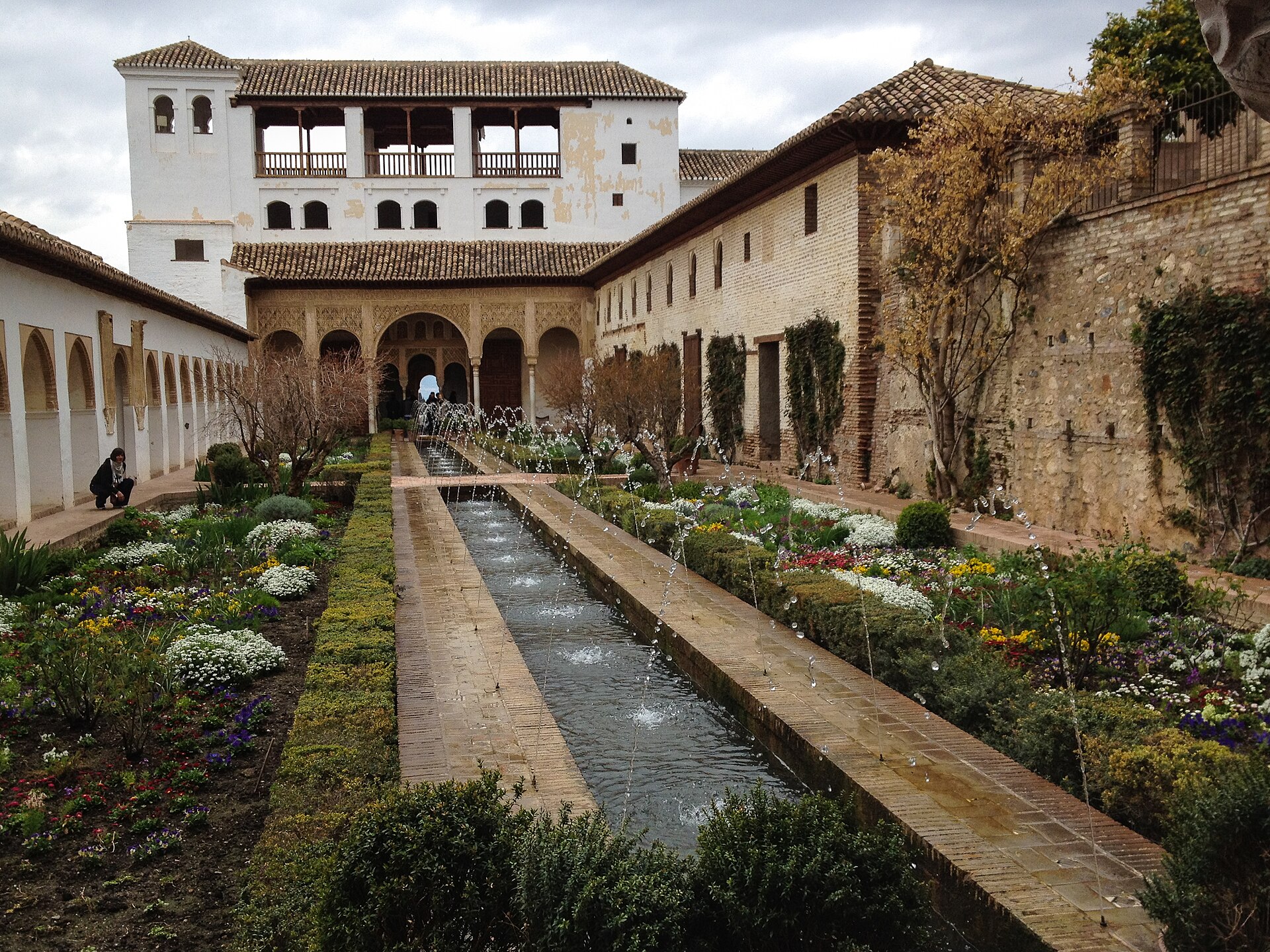
Each of the Nights portrays one of Spain’s most cherished formal gardens. “At the Generalife” takes us first to the magnificent Moorish Alhambra Palace in Granada, in a portrait that, despite occasional moments of crisp rhythm, generally retains a hushed and atmospheric demeanor. The second-place “Distant Dance” celebrates the flamenco song known as a malagueña, filled with the sound of strumming guitars. To conclude, “In the Gardens of the Sierra de Córdoba” makes skilled use of the copla, an Andalusian poetic form that resembles a musical rondo, in which a cyclic refrain alternates with contrasting passages.
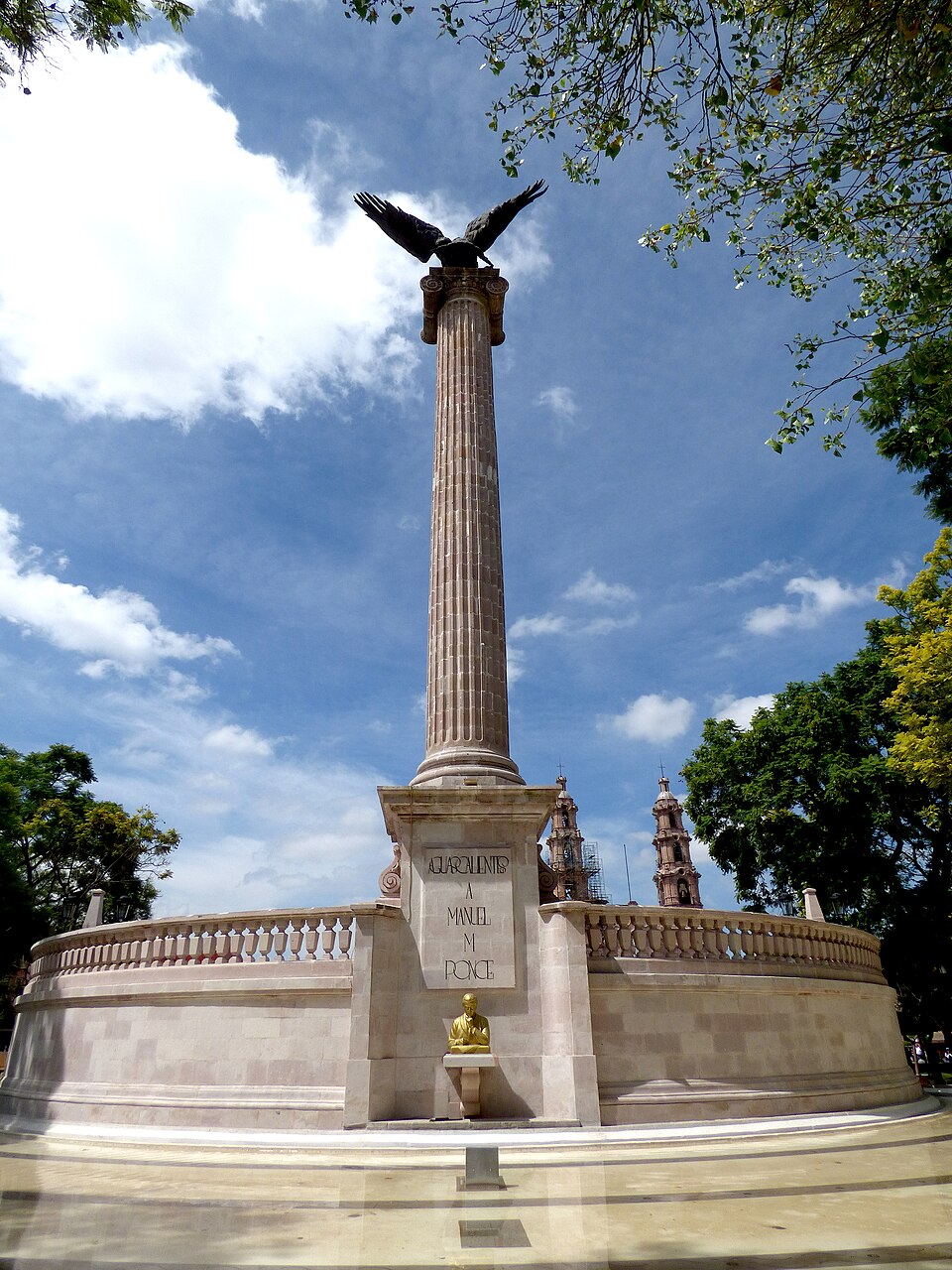
Manuel Ponce (1882–1948)
Chapultepec, Tres Bocetos sinfónicas (1934)
He can rightfully claim the status of forefather and patron saint of modern Mexican concert music, yet Manuel María Ponce Cuéllar is still mostly known for his lovely song “Estrellita.” The rest of his extensive output—for piano, guitar, chamber ensembles, and orchestra—barely registers a blip on the international repertory radar.
That’s too bad, because there’s a lot of terrific stuff just waiting to be discovered. Consider Ponce’s 1934 “Chapultepec, Tres Bocetos sinfónicas,” a triptych of tone poems invoking the vast forested park of the same name in Mexico City. The opening Primavera (Spring) fills the concert hall with magic, as shimmering, dancing figures bring a vital and dense landscape to life in a gradual sustained crescendo.
In second place comes a Nocturno that seems to be more about people than nighttime: think of moonlit gardens where a lovesick swain serenades his lady love perched high above on a castle balcony. The song-and-dance (Canto y Danza)finale starts out a bit somber, with a mournful solo oboe. But a bubbly rhythm begins to form in the background and, before you know it, the entire orchestra throws itself into a joyous celebration of dance and movement.
Ottorino Respighi (1879–1936)
Pines of Rome, P. 141 (1923-1924)
Never confuse a single defeat with a final defeat, wrote F. Scott Fitzgerald. That was never more apropos than with Respighi’s youthful tone poem Fountains of Rome, which failed to impress at its 1917 premiere. That proved to be only a temporary setback; when the eminent conductor Arturo Toscanini took the piece up for a 1918 performance, it became a smash hit and transformed Respighi into not only a world-famous composer but also quite a wealthy one as well.
He never looked back. Two more Roman tone poems followed, Pines of Rome in 1924 – which has become even better known than Fountains – and Roman Festivals in 1928, together with a cornucopia of operas, chamber music, lieder, and above all, orchestral music.
Four stands of pines, four times of day: thus the splendidly evocative world of Pines of Rome, Respighi’s most popular composition and one of the great orchestral showpieces in all literature, given its American premiere by no less than Arturo Toscanini and the New York Philharmonic.
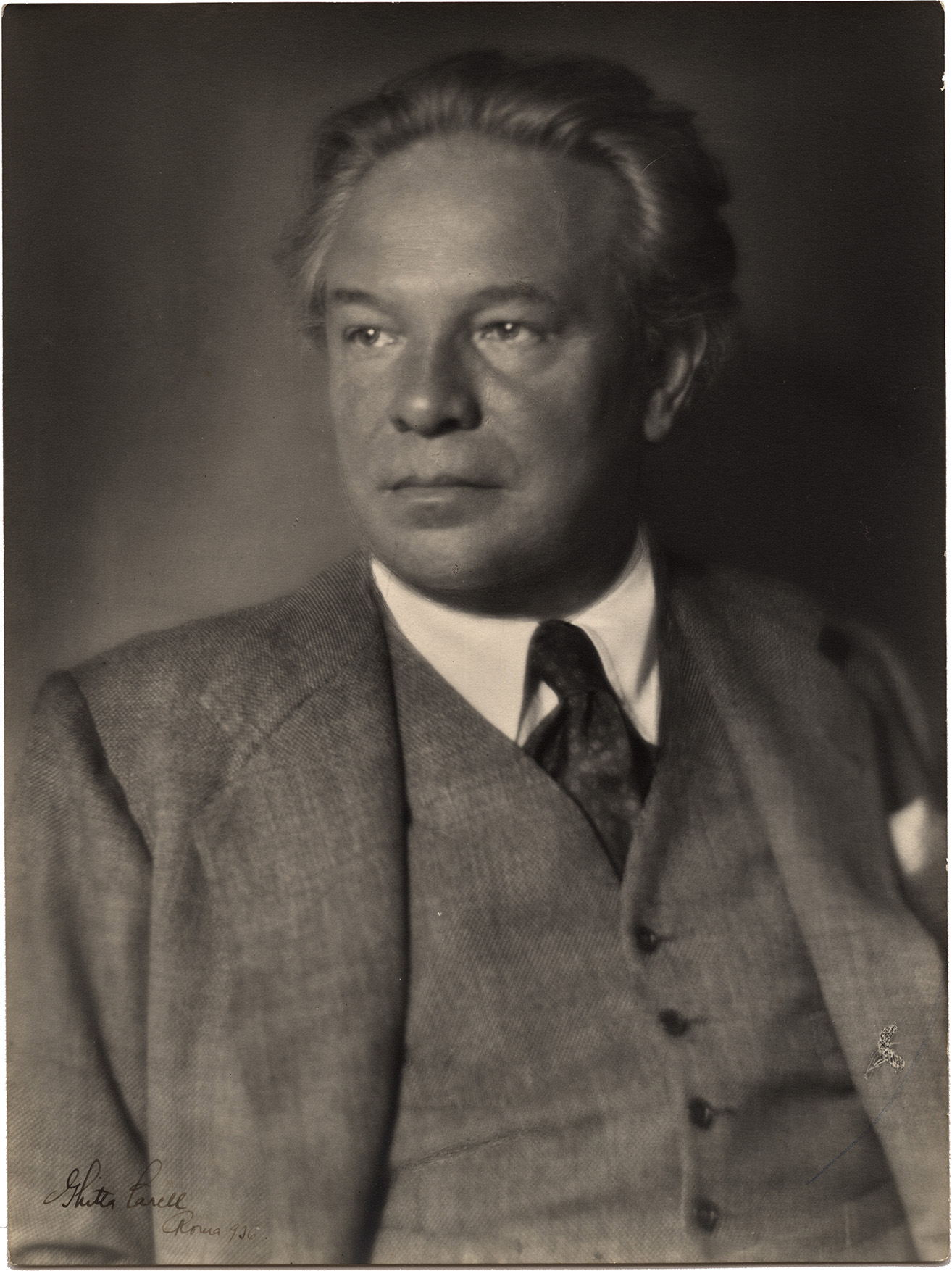
Respighi himself gave us a handy guide to his intentions regarding Pines: “While in his preceding work, Fountains of Rome, the composer sought to reproduce by means of tone an impression of Nature, in Pines of Rome he uses Nature as a point of departure, in order to recall memories and vision. The centuries-old trees which so characteristically dominate the Roman landscape become witnesses to the principal events in Roman life.”
Pines calls for a gigantic orchestra augmented by extra brass and organ for the finale, plus a recording of a nightingale for the third-place nocturne. It is said—but not confirmed—that Respighi himself made that particular recording, to this day included by the publisher with the score.
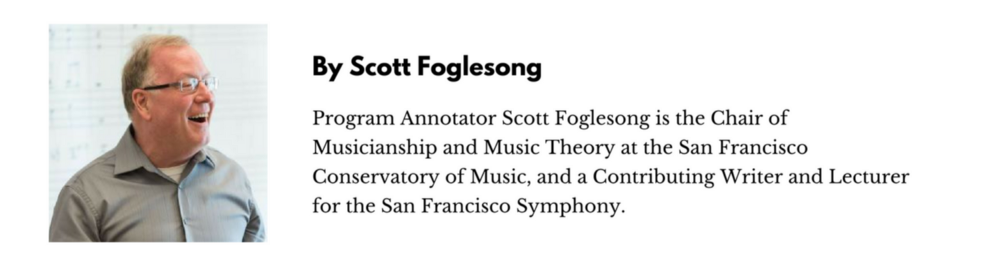
Program Annotator Scott Foglesong is the Chair of Musicianship and Music Theory at the San Francisco Conservatory of Music, and a Contributing Writer and Lecturer for the San Francisco Symphony. He also leads the California Symphony’s ground-breaking music education course for adults Fresh Look: The Symphony Exposed.
The 26-27 Season concludes with PINES OF ROME on Saturday, May 1 at 7:30 p.m. and Sunday, May 2 at 4 p.m. at the Lesher Center for the Arts in Walnut Creek. Single tickets start at $50 and at $25 for students 25 and under, and include a free 30-minute pre-concert talk starting one hour before the performance. Buy tickets online or call or visit the Lesher Center Ticket Office at 925.943.7469, Wed – Sun, 12:00 noon to 6:00 p.m.