Jean Sibelius (1865–1957)
The Oceanides, Op. 73 (1914)
Sibelius was at his creative peak in 1913 when a commission arrived from Yale composer Horatio Parker on behalf of Carl Stoeckel, a wealthy American arts patron. Sibelius started work in the winter of 1914 and mailed the new piece to Parker in March. But he had reservations about that initial version, so he performed extensive surgery on it during the Atlantic crossing for his first, and as it turned out only, visit to the United States.
Sibelius loved America. Niagara Falls blew his socks off. Ever the bon vivant, he reveled in the gustatory and bibulous joys of New York’s legendary Delmonico’s restaurant. And he was thrilled by the crackerjack orchestra assembled for Stoeckel’s music festival in Norfolk, Connecticut on June 4, 1914, as he well might have been—it was staffed with musicians from the New York Philharmonic, Boston Symphony Orchestra, and Metropolitan Opera orchestra.
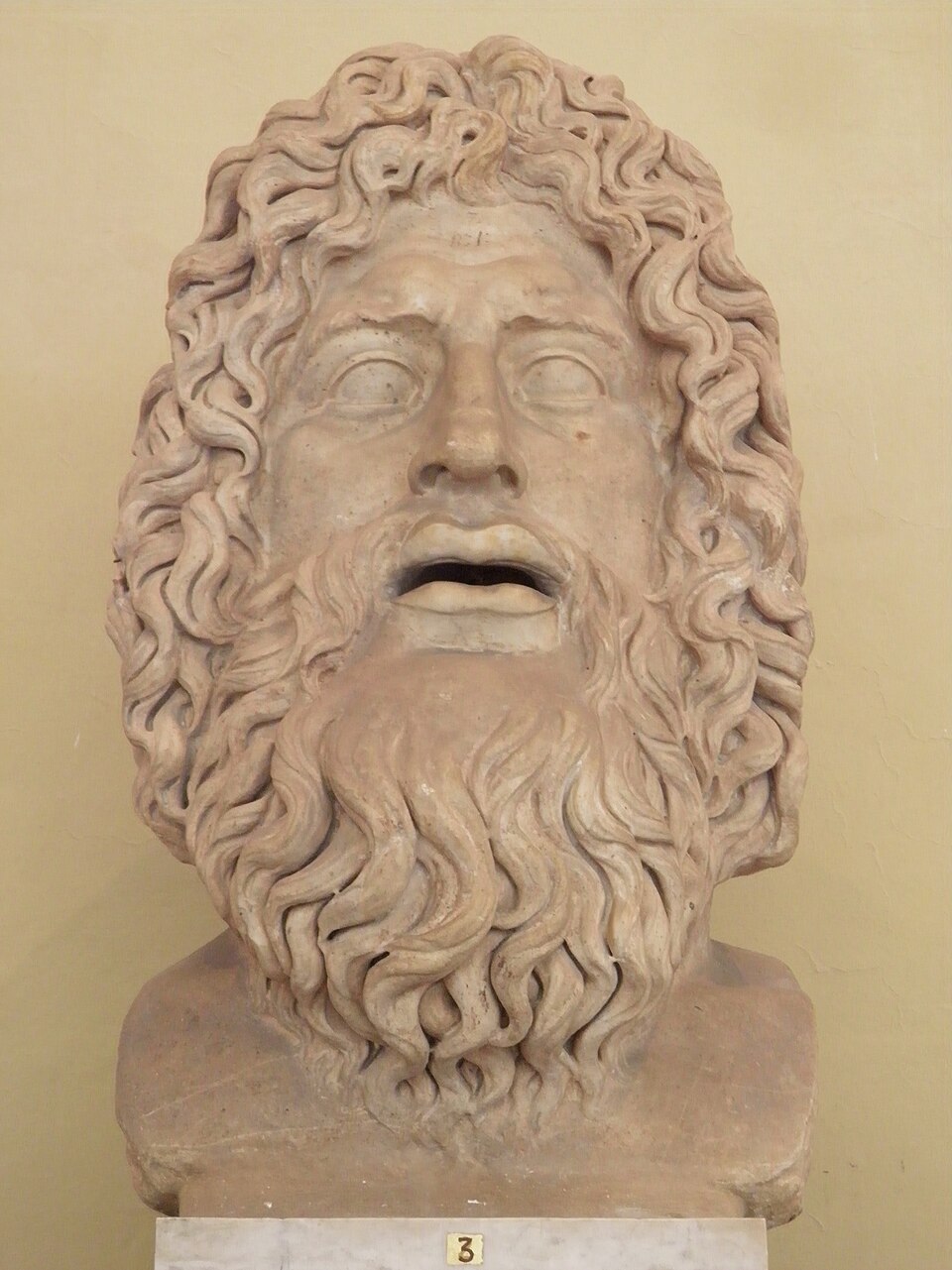
His new work was The Oceanides, described by critic and Sibelius champion Olin Downes as “the finest evocation of the sea that has ever been produced in music.” Unlike most Sibelius tone poems, Oceanides isn’t based on Finnish folklore; instead, it is inspired by the daughters of Oceanus, god of the Earth-encircling waters in Greek mythology. It begins in a hush, with muted timpani, strings, and high flutes. The ocean’s titanic power makes itself felt gradually, eventually erupting into massive surges via paired harps and majestic brass proclamations. The tumult gradually subsides, leading to an ending in relative stillness—but that’s deceptive since, as we all know, the sea is never truly still.

Jennifer Higdon (b. 1962)
Cello Concerto (2025)
Pulitzer Prize laureate Jennifer Higdon has written a veritable cornucopia of concertos—for orchestra, harp, low brass, mandolin, oboe, percussion, piano, soprano sax, trombone, tuba, viola, violin, and two violins plus double bass. Such bounty reflects her popularity with both audiences and performers alike, thanks to commissions from instrumentalists such as percussionist Collin Currie and violinist Hilary Hahn. Equally influenced by rock groups such as the Beatles and the Rolling Stones as by her symphonic predecessors, Higdon has developed a musical language that builds on the practices of the past without being enslaved by them.
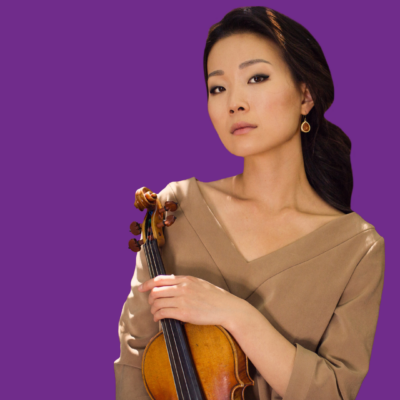
Now she has given us a new concerto, this time for cellist Julian Schwarz, noted for the intense lyricism and tonal beauty of his style. “Julian has an incredible sound,” Higdon tells us, “and I really wanted to show off his playing.”
That isn’t always easy with cello concertos, which until the late 19th century were usually spurned by composers who were convinced that the inherent sonic imbalance between cello and orchestra could not be successfully overcome. In 1894 Antonín Dvořák broke through brilliantly with his magnificent cello concerto, thereby opening a path for later composers. Higdon knows well the challenges of writing an effective cello concerto, and to that end she has included “many chamber music-like passages where it’s just Julian and a couple of instruments.”
The concerto is laid out in four sections, ranging from a narrative opening (“Poet”) to dancelike passages (“Dances”) that call on virtuosity from soloist and orchestra alike. A midway “Fervent” provides an emotional heart center, while the final “Lines” pulls together all the disparate elements from the concerto as a whole.
Béla Bartók (1881–1945)
Concerto for Orchestra (1943)
Unlike Sibelius, Bartók made multiple trips to America, culminating in a 1940 visit that turned out to be permanent as he and his family fled the rise of fascism in his homeland. It began promisingly enough, with a well-paid position at Columbia University as a visiting ethnomusicologist as well as an extended concert tour through the Midwest and West Coast.
By 1942 things were falling apart. The Columbia gig had been for one year only. Work was scarce, income was low, and his health became a serious concern, with the onset of what would eventually be diagnosed as leukemia. By 1943 he was wraithlike at 87 pounds and hospitalized when he received a commission for an extended orchestral piece from Serge Koussevitzky, music director of the Boston Symphony Orchestra and an indefatigable force in modern music.
Bartók doubted that he had another major composition in him, but happily for posterity, he rallied. He started the project in August 1943 and two months later gifted humanity with the glorious Concerto for Orchestra. Given its premiere performance in Boston on December 1, 1944, it was immediately hailed as a masterpiece. (Nota bene: it didn’t hurt any that Koussevitzky and the BSO played the spots off the thing. We have a broadcast dub from a subsequent performance on December 30, and it’s a knockout.)
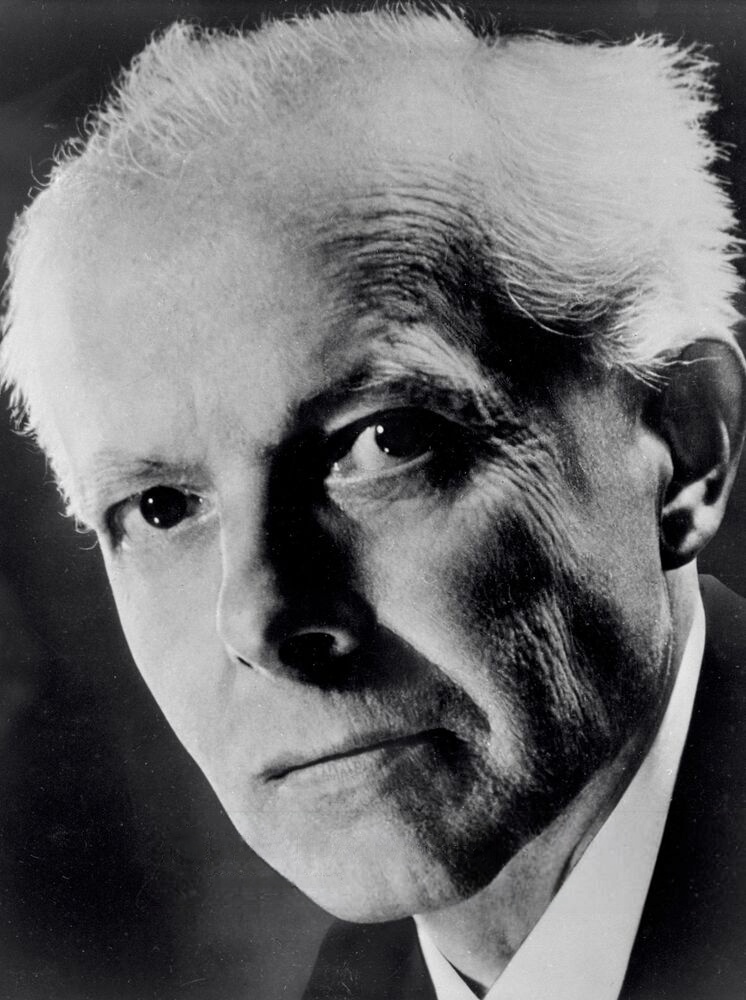
Although the work’s scope is symphonic, Bartók used the term ‘concerto’ in the sense of individual instruments, or small groups, highlighted within the larger orchestral ensemble à la Bach’s “Brandenburg” concertos. Laid out in Bartók’s preferred five-movement ‘arch’ form, it offers two substantial outer movements, two lighter interludes in second and fourth place, and a central elegy at the work’s emotional core. The opening movement’s slow introduction belies the power and energy to come in a robust structure that subjects brief melodic units to no end of brilliant manipulation and development. The following ‘game of pairs’ combines charm and light whimsy in a dancelike affair that presents its material via paired instruments. In third place comes a magnificently somber ‘elegy’ of mournful dignity and reserve.
Bartók was irritated by the attention being lavished on Shostakovich’s 7th “Leningrad” symphony, a new arrival he considered trite, banal, and obnoxiously bombastic. He vented his spleen in the Concerto’s ‘interrupted intermezzo’ in which a gently rocking main reprise gives way to the Nazi marching theme from the Shostakovich symphony—it’s actually a quote from Franz Léhar’s The Merry Widow—in a blistering orchestral takedown, complete with fortissimo Bronx cheers. To conclude, an exhilarating Finale combines sophisticated compositional technique with all the energy of a high-spirited folk festival.
Program Annotator Scott Foglesong is the Chair of Musicianship and Music Theory at the San Francisco Conservatory of Music, and a Contributing Writer and Lecturer for the San Francisco Symphony. He also leads the California Symphony’s ground-breaking music education course for adults Fresh Look: The Symphony Exposed.
The 26-27 Season begins with SIBELIUS, HIGDON, AND BARTÓK on Saturday, September 26 at 7:30 p.m. and Sunday, September 27 at 4 p.m. at the Lesher Center for the Arts in Walnut Creek. Single tickets start at $50 and at $25 for students 25 and under, and include a free 30-minute pre-concert talk starting one hour before the performance. Buy tickets online or call or visit the Lesher Center Ticket Office at 925.943.7469, Wed – Sun, 12:00 noon to 6:00 p.m.